Most people spend more time organizing their holiday decorations than their legal paperwork.
And honestly? That becomes a real problem the moment there is an emergency.
I cannot tell you how many families know Mom “definitely had a will somewhere” but nobody knows where “somewhere” actually is. Then begins the frantic search through filing cabinets, kitchen drawers, old purses, random folders labeled “Taxes 2017,” and the infamous plastic tote in the garage.
Having documents is only step one.
Knowing where they are, keeping them protected, and making sure the right people can access them is what actually makes the plan work.
Especially if you are part of the sandwich generation and juggling your own household while also helping aging parents.
First Things First: What Documents Should Be Stored Safely?
Not every paper in your house needs Fort Knox treatment. But certain documents absolutely deserve a proper system.
This usually includes:
- Last Will and Testament
- Durable Power of Attorney
- Advance Healthcare Directive or Living Will
- HIPAA Release
- Trust documents
- Deeds and titles
- Insurance policies
- Military discharge paperwork
- Birth and marriage certificates
- Social Security information
- Financial account information
- Funeral or cremation instructions
- Password and digital asset information
If your family would panic trying to replace it or locate it during a crisis, it probably belongs in an organized system.
The Biggest Mistake People Make
They hide everything too well.
Yes, seriously.
People get so worried about theft or privacy that they put documents somewhere nobody would ever think to look. Then the people who actually need them cannot access them when time matters most.
A locked safe nobody can open does not help your family.
Neither does a safe deposit box that is inaccessible after death.
This is where practical planning matters more than paranoia.
Should You Use a Safe Deposit Box?
Maybe. But understand the limitations.
Safe deposit boxes can be useful for storing copies, valuables, or backup records. However, depending on how the box is titled and your state’s procedures, loved ones may not immediately gain access after death.
That delay can create unnecessary stress when someone is trying to handle funeral arrangements, financial accounts, or probate paperwork.
If you use one:
- Make sure trusted individuals know the bank location
- Keep the box number documented
- Understand who legally has access
- Avoid making it the only place your originals exist
A surprising number of families know Dad “had everything at the bank” but cannot get into the box when they actually need it.
What About a Fireproof Safe at Home?
For many families, this is the most practical option.
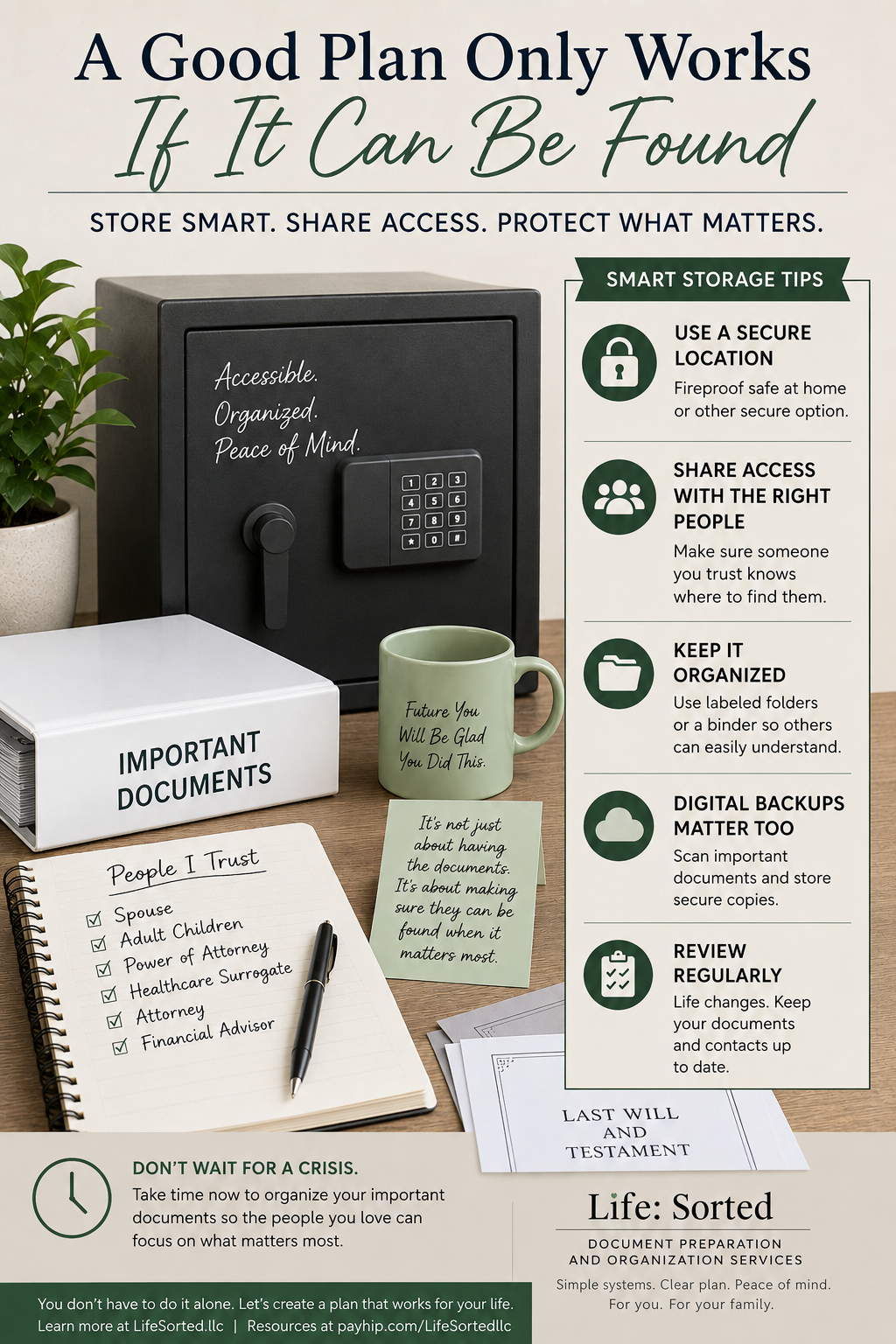
A good quality fire-resistant and water-resistant safe can work very well if:
- It is accessible
- Someone trusted knows where it is
- Someone trusted knows how to open it
- The contents are organized and labeled
Please do not shove 30 years of random paperwork into a safe and call it estate planning.
Your future family members would like to respectfully decline that experience.
Who Should Have Copies?
This is where people get uncomfortable, but it matters.
The people named in important roles should generally know:
- That the documents exist
- Where they are located
- How to access them in an emergency
This may include:
- Your spouse
- Adult children
- Trusted family members
- Your healthcare surrogate
- Your power of attorney agent
- Your attorney if you work with one
You do not necessarily need to hand everyone a full copy of everything right now.
But if nobody knows where anything is, your plan can fall apart fast.
Digital Copies Matter Too
Paper originals are still important, especially for signed legal documents.
But digital backups are incredibly helpful.
Scanning documents and storing secure copies can:
- Help family members access information quickly
- Prevent loss from fire or flooding
- Make sharing documents easier during emergencies
- Reduce the “where did I put that?” chaos
Just make sure passwords and account access instructions are also documented somewhere secure.
Otherwise you have simply created a very organized digital mystery.
The Real Goal Is Simplicity
The best system is not the fanciest system.
It is the one your family can actually understand during a stressful moment.
A clearly labeled binder. Organized folders. Emergency contacts. Instructions. Copies. Storage locations written down.
That is what helps people.
Not twelve secret hiding places and a password nobody can remember.
This Is Exactly Why I Created Life: Sorted
Most people do not need more random folders.
They need a practical system that helps their family know:
- What exists
- Where it is
- What to do next
- Who to call
That is exactly what I help people create through my document preparation services, Legacy Binder system, and organization consulting.
Whether you are getting your own paperwork together or helping aging parents finally organize theirs, now is the time to do it.
Because emergencies do not send calendar invites first.
You can learn more about my services at Life: Sorted, LLC or explore downloadable resources at Life: Sorted Payhip Store.
Disclaimer: I am not an attorney and do not provide legal advice. I provide Florida document preparation services using client-directed information and educational organizational tools. For legal advice or complex estate planning needs, please consult a licensed attorney.
Leave a Reply