Planning is not just for married couples, parents, or people with a house full of relatives competing for space in the family group chat.
If you are single, live alone, do not have children, or are not close with your biological family, planning may be even more important for you. There may not be an obvious person available to step in, find your information, manage an emergency, or communicate your wishes.
Someone may eventually make those decisions. The question is whether it will be someone you deliberately chose or someone selected by Florida law, a medical facility, or a court because you never documented your preferences.
That is not meant to scare you. It is meant to get your attention.
Being Independent Does Not Mean Doing Everything Alone
Many single adults are extremely capable. You manage your own household, finances, appointments, insurance, pets, career, and approximately 47 passwords that you swear you will organize someday.
But independence can create a planning blind spot.
When you are accustomed to handling everything yourself, it is easy to assume you will always be available to handle everything yourself. Unfortunately, illness, injury, hospitalization, and death do not consult your calendar first.
Ask yourself:
Who could access important information during an emergency?
Who would know which bills must be paid?
Who could speak with your medical providers?
Who would care for your pets?
Who would understand your wishes instead of guessing?
Who would know where your documents are stored?
If the answer is “I am not sure,” that is where your planning needs to begin.
You Are Allowed to Choose Your People
Your trusted decision makers do not necessarily have to be a spouse, child, sibling, or other close relative.
Depending on the document and circumstances, you may be able to choose a trusted friend, extended family member, member of your chosen family, or qualified professional. The important part is selecting someone who is responsible, willing to serve, and capable of following your directions.
This is not a popularity contest. The person you enjoy having brunch with may not be the person you want handling financial matters during a crisis.
Consider whether the person:
Communicates clearly
Respects your wishes
Can remain calm under pressure
Is organized and reasonably available
Will ask questions when necessary
Can handle uncomfortable conversations
Will do what you requested, even if they would personally choose differently
Always speak with someone before naming them. Finding out that you have been assigned a major responsibility while standing in a hospital hallway is not the ideal onboarding process.
You should also consider naming an alternate in case your first choice becomes unavailable, unwilling, ill, or unable to serve.
Your Health Care Wishes Need a Voice
A designation of health care surrogate allows you to identify someone who may make health care decisions or receive health information on your behalf, depending on the authority granted in the document.
A living will communicates your wishes concerning life-prolonging procedures under certain medical circumstances.
These documents serve different purposes. Together, they can provide both a decision maker and written guidance about the care you would or would not want.
Without clear instructions, people may be forced to make deeply personal decisions while emotional, frightened, and unsure of your preferences. When no appropriate person has been designated, Florida law may determine who can act as a proxy, using an established order of priority.
That legal order may not match your relationships, values, or chosen family.
Documenting your wishes gives the people helping you something far better than a guess.
Someone May Need to Handle Your Financial Affairs
A durable power of attorney may authorize another person to handle specific financial or legal matters while you are living. Depending on the powers granted, this could include managing bills, dealing with financial institutions, handling property matters, or completing other authorized transactions.
This document ends when you die. It does not replace a will, and it does not give someone permanent control over your life just because you signed it.
It does, however, require serious thought.
The person you appoint may receive significant authority, so this is not the place for a casual “she seems nice” decision. Choose someone trustworthy, financially responsible, and able to keep good records.
People with complicated assets, business interests, significant family conflict, special-needs concerns, tax issues, trusts, or questions about which powers should be granted should consult a Florida attorney for legal advice.
A Will Still Matters When You Do Not Have Children
A common misconception is that a will is unnecessary when someone does not have a spouse or children.
In reality, that may make a will more important.
A Florida will can identify who should receive probate assets and nominate a personal representative to administer the estate. Without a valid will, Florida’s intestacy laws determine who inherits probate property.
That could mean relatives you barely know, relatives you have not spoken to in years, or family members you would never have selected.
Your friends and chosen family generally do not inherit simply because they were the people who loved, supported, and showed up for you.
You may also want to consider:
Specific gifts to important people
Charitable gifts
Instructions concerning personal belongings
A plan for pets and their care
Digital accounts and online property
Who should manage the estate
Alternate beneficiaries and decision makers
A will does not control every asset. Accounts with valid beneficiary designations, jointly owned property, and certain other assets may transfer outside the will. That is why planning should include a review of how assets are titled and who is listed on beneficiary forms.
A beautiful will stored in a drawer does not fix an outdated beneficiary designation naming an ex from 2009. Paperwork has a surprisingly long memory.
Your Pets Need More Than a Verbal Promise
For many single adults, pets are family. Still, pets cannot inherit money directly or explain that they refuse to eat the expensive food you bought but will happily consume something questionable from the yard.
Choose a caregiver and an alternate. Discuss the responsibility with them before documenting the plan.
Leave practical information, including:
Veterinarian contact information
Medications and medical conditions
Feeding instructions
Daily routines
Behavioral concerns
Microchip and licensing information
Emergency contacts
Financial arrangements for their care
You may also need legal advice about creating an enforceable pet trust or another formal arrangement when substantial funds, long-term care, or complicated circumstances are involved.
Organize the Information No Legal Document Can Hold
Legal documents are only part of a complete plan.
Your trusted people may also need to know how to locate insurance policies, household information, account contacts, identification documents, passwords, subscriptions, pet records, funeral preferences, and the thousand little details that keep your life functioning.
This is where a legacy binder or organized digital file becomes invaluable.
Your plan should answer practical questions such as:
Where are the original documents?
Who should be contacted first?
Which accounts have beneficiaries?
Are there automatic payments?
Where are keys, codes, and passwords stored?
What are your funeral or memorial preferences?
Is there someone who should not be contacted or involved?
What personal belongings have special meaning?
Do not hide everything so securely that nobody can find it. A perfect plan that remains undiscovered is not especially helpful.
At least one trusted person should know that your plan exists and how to access it during an emergency.
Professional Help Can Fill the Gaps
Some people truly do not have an appropriate friend or relative to appoint. Others do not want to burden personal relationships with financial or medical responsibilities.
Depending on your needs, you may want to explore professionals who can serve in particular roles. These may include attorneys, professional fiduciaries, trust companies, professional guardians, accountants, care managers, or other qualified service providers.
Professional services usually involve fees and should be carefully reviewed. Ask about licensing, experience, availability, costs, recordkeeping, conflicts of interest, succession planning, and exactly what services will be provided.
A Florida attorney can explain the legal options available and help determine whether professional appointments, a trust, or another planning strategy is appropriate for your circumstances.
Do Not Wait Until You Find the Perfect Person
One reason single adults delay planning is that they have not identified the perfect person for every role.
Perfect may not exist.
Choose the best responsible person currently available, name an alternate whenever possible, provide clear instructions, and review the plan regularly. You can update your choices when relationships or circumstances change.
An imperfect plan that accurately reflects your current wishes is usually more useful than a flawless imaginary plan you never complete.
Planning should also be reviewed after a move, major health change, death, marriage, divorce, falling-out, new relationship, significant financial change, or whenever a decision maker is no longer able or willing to serve.
Start Before an Emergency Chooses for You
You do not need to complete everything in one heroic Saturday surrounded by paperwork and cold coffee.
Start with three decisions:
Choose who should speak for you medically.
Choose who could responsibly handle financial matters.
Choose who should receive your property and personal belongings.
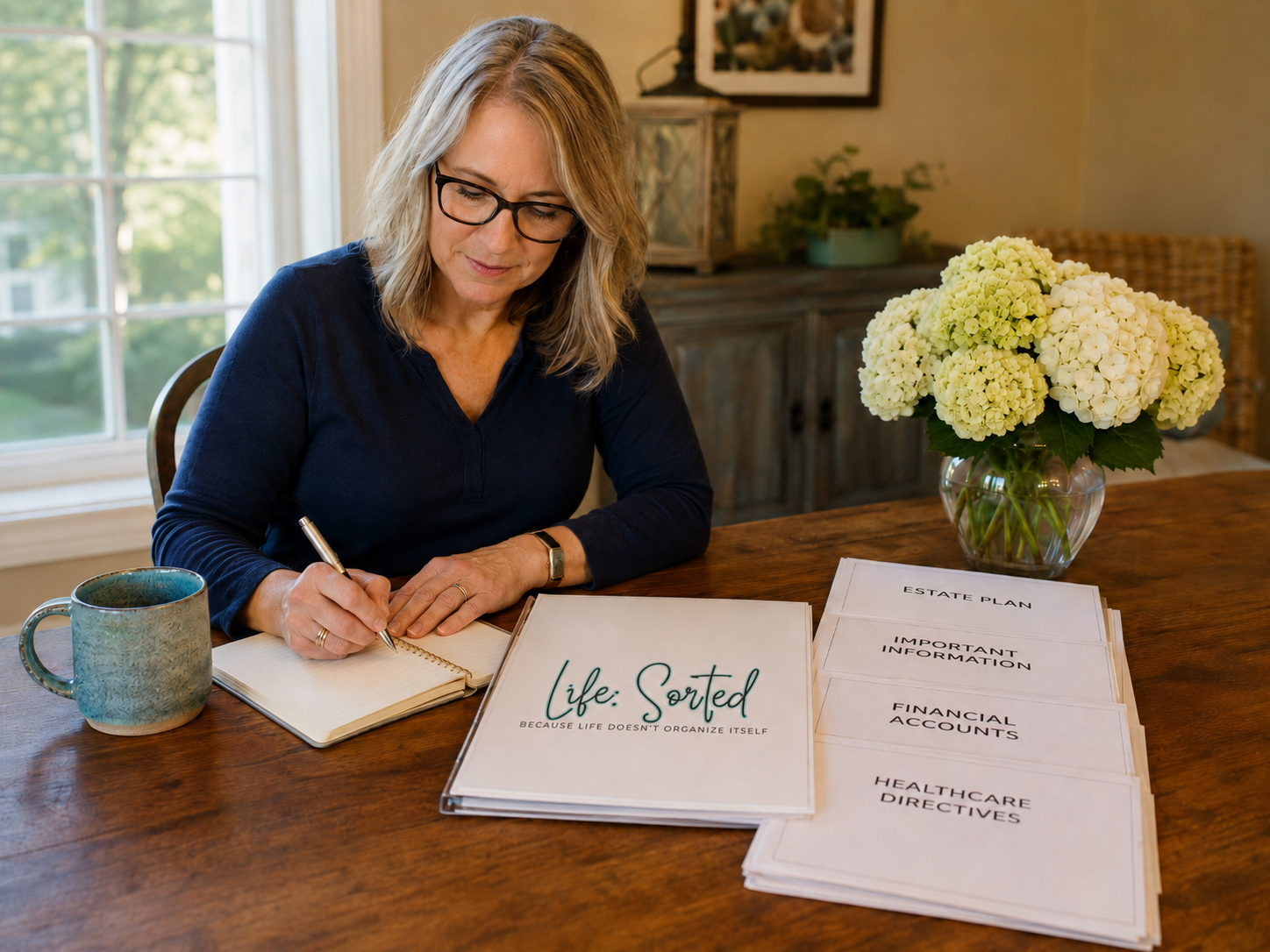
Then document your wishes, complete the appropriate legal documents, organize your important information, and tell your trusted people where everything is located.
Life: Sorted helps Florida residents organize their information and prepare certain documents using the information and decisions they provide. We also offer legacy-planning resources for people who want a clearer, more complete system for communicating their wishes.
When a situation requires legal advice, customized legal analysis, trusts, complex estate planning, or help deciding which legal strategy is appropriate, we encourage working with a qualified Florida attorney.
You can learn more about planning support, document-preparation services, and the Life: Sorted Legacy Binder at lifesorted.llc.
Because living alone should never mean leaving everything behind for someone else to figure out.
Disclaimer
Life: Sorted, LLC is not a law firm and does not provide legal advice or legal representation. Information provided is for general educational purposes and is not a substitute for advice from a licensed Florida attorney. Nonlawyer document-preparation services are limited to recording information provided by the customer on applicable forms and documents.
Leave a Reply